Ohrid is one of North Macedonia’s most treasured destinations, offering an exceptional blend of natural beauty, deep history, and rich culture. It lies on the shores of Lake Ohrid, a UNESCO World Heritage site recognized for its unique biodiversity and ancient origins. Lake Ohrid is one of the oldest lakes in Europe, formed by tectonic forces millions of years ago and home to over 200 endemic species of plants and animals, making it globally significant both naturally and culturally.
The city of Ohrid itself is among the oldest continuously inhabited settlements in Europe, with layers of history visible from archaeological remains dating from prehistoric times through the Roman, Byzantine, Medieval, and Ottoman periods. Within the town and the surrounding region are ancient basilicas, famous churches such as St. Sophia, Holy Mother of God Perivleptos, and St. John at Kaneo, and the oldest Slav monastery, all reflecting centuries of artistic and religious traditions.
Ohrid is sometimes called the “Jerusalem of the Balkans” because at one point it had some 365 churches and monasteries, symbolizing its long-standing spiritual and cultural heritage. Today, the old town enchants visitors with narrow cobblestone streets, picturesque traditional houses, scenic viewpoints, and medieval monuments that sit above the lake’s crystal waters.
In the 11th century, Ohrid was a major intellectual and cultural centre due to the Ohrid Literary School, one of the earliest Slavic educational institutions, which helped disseminate Slavic literacy and culture across the region.
Ohrid also hosts vibrant cultural events, especially in summer. Each year from 12 July to 20 August, the Ohrid Summer Festival brings international classical music, theatre and dance performances to venues across the old town, showcasing world-class artists under the patronage of North Macedonia’s Ministry of Culture. There are also music and folklore festivals, such as the Balkan Folklore Festival and Ohrid Fest, celebrating traditional and contemporary music and dance.
The city is situated at approximately 700 meters above sea level and enjoys a continental climate, characterized by generally mild temperatures throughout the year, making it pleasant for both sightseeing and outdoor activities.
Whether you’re exploring ancient history, enjoying lakeside walks or beaches, or attending cultural festivals, Ohrid offers a unique and unforgettable travel experience rooted in centuries of heritage and surrounded by stunning scenery.
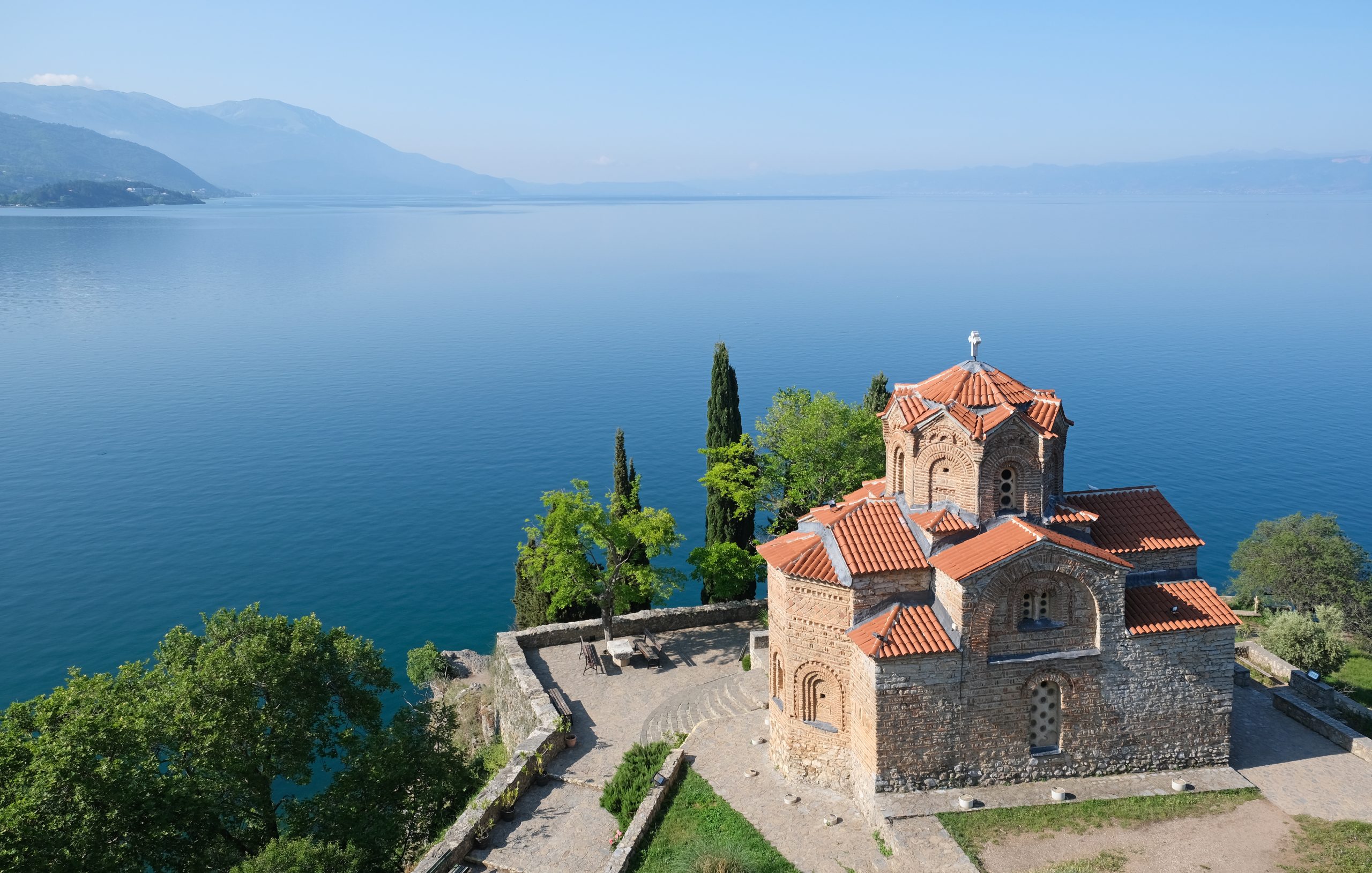
Saint John Kaneo
Saint John the Theologian, Kaneo or simply Saint John at Kaneo is a Macedonian Orthodox church situated on the cliff over Kaneo Beach overlooking in the city of Ohrid, Macedonia. The church is dedicated to John of Patmos, the writer of Revelation, who has been by some considered to be the same person as John the Apostle. The construction date of the church remains unknown but documents detailing the church property suggest that it was built before the year 1447. Archaeologists believe that the church was constructed some time before the rise of the Ottoman Empire very likely in the 13th century. 🗺️ View location on the map
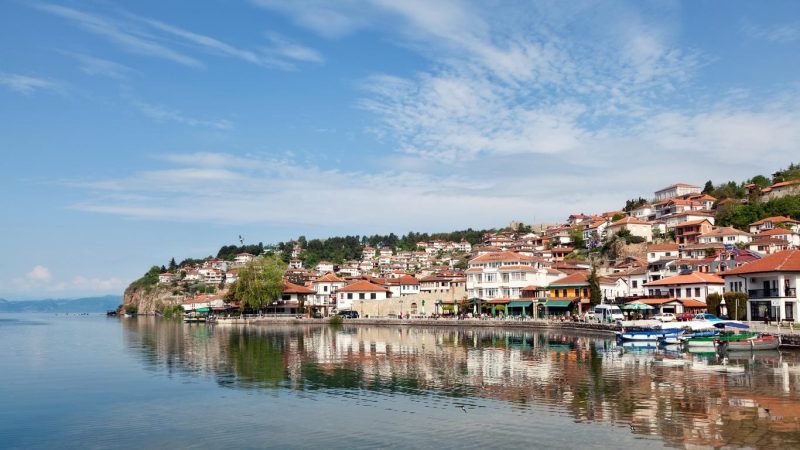
City of Ohrid
Ohrid is is the largest city on Lake Ohrid and the eighth-largest city in Macedonia. Ohrid is known for once having 365 churches, one for each day of the year, and has been referred to as a “Jerusalem of the Balkans”. In 1979 and in 1980 respectively, Ohrid and Lake Ohrid were accepted as Cultural and Natural World Heritage Sites by UNESCO. Ohrid is one of only 28 sites that are part of UNESCO’s World Heritage that are Cultural as well as Natural sites.
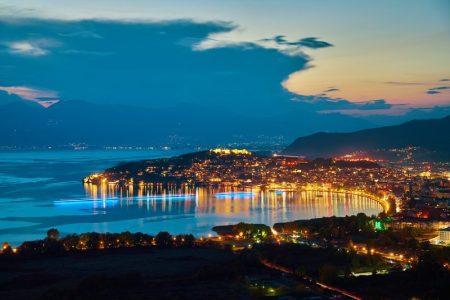
Lake Ohrid
Ohrid Lake is the oldest and one of the deepest lakes in Europe (max depth 288m or 940ft). It is estimated to be 4 million years old and has 200 endemic species that haven’t been found at any other place in the world. It was declared a World Heritage site by UNESCO in 1979.

City of Ohrid on the cover of National Geographic
Saint John the Theologian, Kaneo along with the city of Ohrid was featured on the cover of the National Geographic as one of 100 places that will change your life.
Monastery of Saint Naum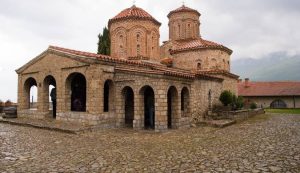
The Monastery of Saint Naum is a historic Macedonian Orthodox monastery located on the shores of Lake Ohrid, approximately 29 km south of the city of Ohrid in North Macedonia. It was founded in 905 AD by Saint Naum of Ohrid, a medieval writer, teacher, and enlightener who played a significant role in the spread of Christianity and literacy among the Slavic peoples, and who was later buried within the church itself. Over the centuries the monastery has been an important spiritual and cultural center, hosting a Greek school from the 16th century and maintaining close ties with the printing house of Moscopole. Today, the monastery complex, set amidst beautiful lake views and tranquil gardens, remains one of the most popular tourist destinations in the region, attracting visitors with its historical legacy and serene atmosphere.
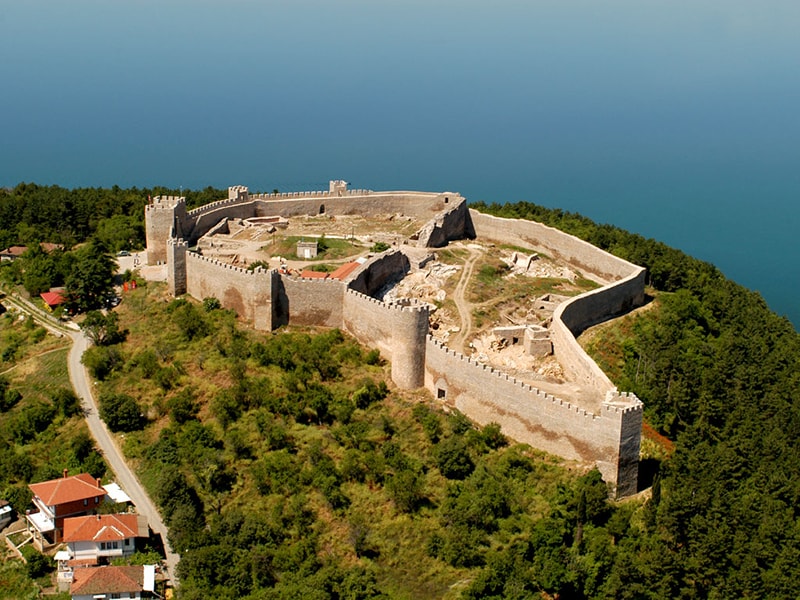
Samuel’s Fortress
Samuel Fortress is considered one of the largest fortifications preserved in Macedonia. It was first mentioned by the historian Titus Livy in the 3rd century BC, while it was still a fortress in the city of Lychnidos.
As early as the fifth century AD, Ohrid was mentioned by Roman historians as a city with fortresses, which like other Roman cities in the Balkans was defended from the invasions of the wandering tribes, during the great migration of peoples in the IV and V century. 🗺️ View location on the map
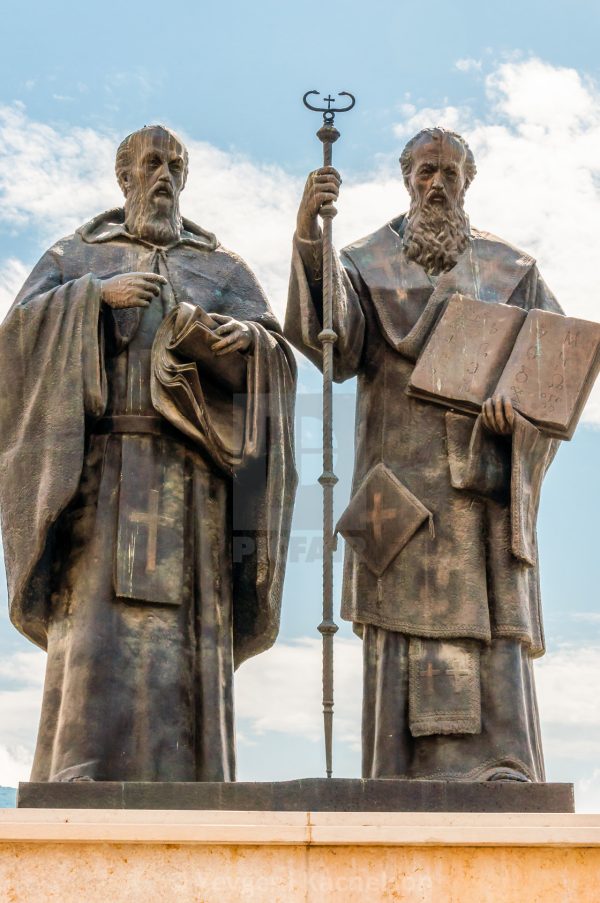
Ss. Cyril and Methodius
Cyril and Methodius were two brothers and Byzantine Christian theologians and missionaries. For their work evangelizing the Slavs, they are known as the “Apostles to the Slavs”. They are credited with devising the Glagolitic alphabet, the first alphabet used to transcribe Old Church Slavonic. After their deaths, their pupils continued their missionary work among other Slavs. Both brothers are venerated in the Eastern Orthodox Church as saints with the title of “equal-to-apostles”. In 1880, Pope Leo XIII introduced their feast into the calendar of the Roman Catholic Church. In 1980, Pope John Paul II declared them co-patron saints of Europe.
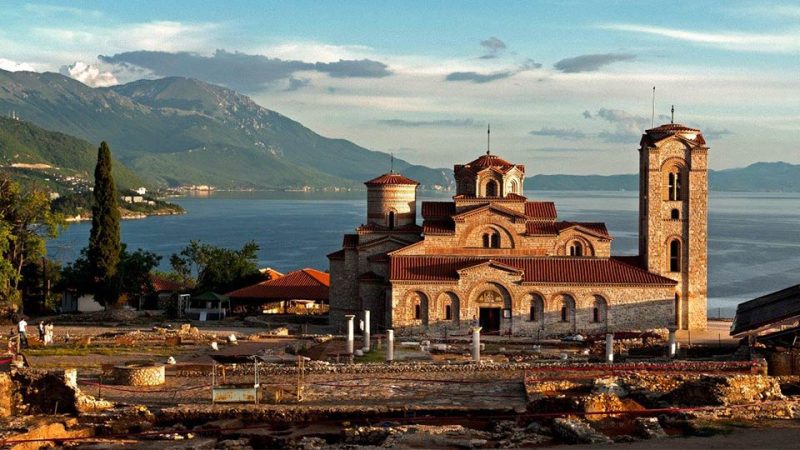
Plaosnik
Plaosnik was built by St. Clement in the year 893 on the foundation of an early Christian basilica, and dedicated to St. Panteleimon. It was here that the Ohrid Literary School, a center of Slavonic literary and cultural activity where more than 3,500 disciples were educated and it is considered as the first university in Europe. St. Clement was buried in this church, in the tomb which was built by his own hands. 🗺️ View location on the map