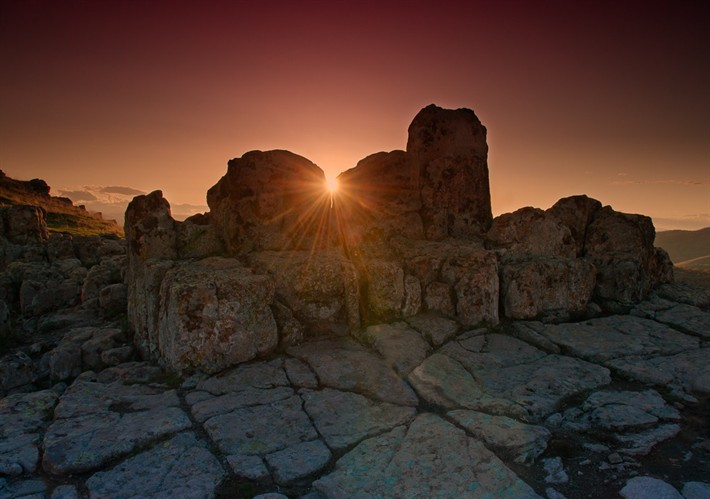
Kokino Observatory
The megalithic observatory Kokino (1800. BC) located at a distance of about 75 km from Skopje and 35 km from Kumanovo. In 2005 NASA from the list of 15 such observatories worldwide, ranked Kokino fourth. 🗺️ View location on the map
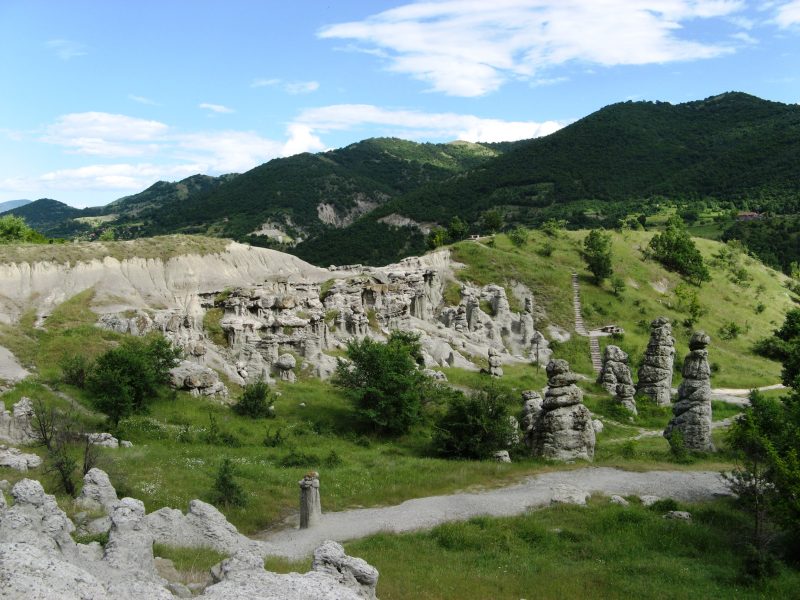
Kuklica
The geological reserve Kuklica. This reserve is one of only three reserves around the world (the other two are in Chemnitz and Lesbos – Greece). Scientists say that the stone figures were created ten million years ago when there was still no people on the planet. Vertical erosion of volcanic rocks created “puppets” greater than ten meters, which today dominate the tame surroundings. Over time, the nature of these rare carved masterpieces. In the reserve there are 148 dolls, or pyramids of earth. 🗺️ View location on the map
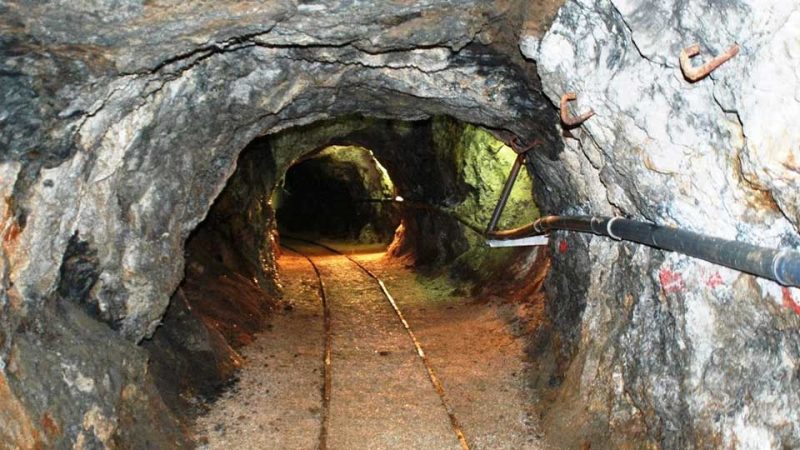
Alshar Mine
Alshar on Mount Kozuv is the one and only mine in the world that has talium and it’s potential mine with ecological clean energy.
The legend says that, Alexander the Great army used this material to cover their shields. The sun reflection could blind the enemies for a second which would have been enough for the soldiers to do the finishing move. That was the only reason why Alexander the Great was fighting during the day in all his great fights.
From 2004, this mine is considered as a monument of the nature and part of the Emerald Network. 🗺️ View location on the map
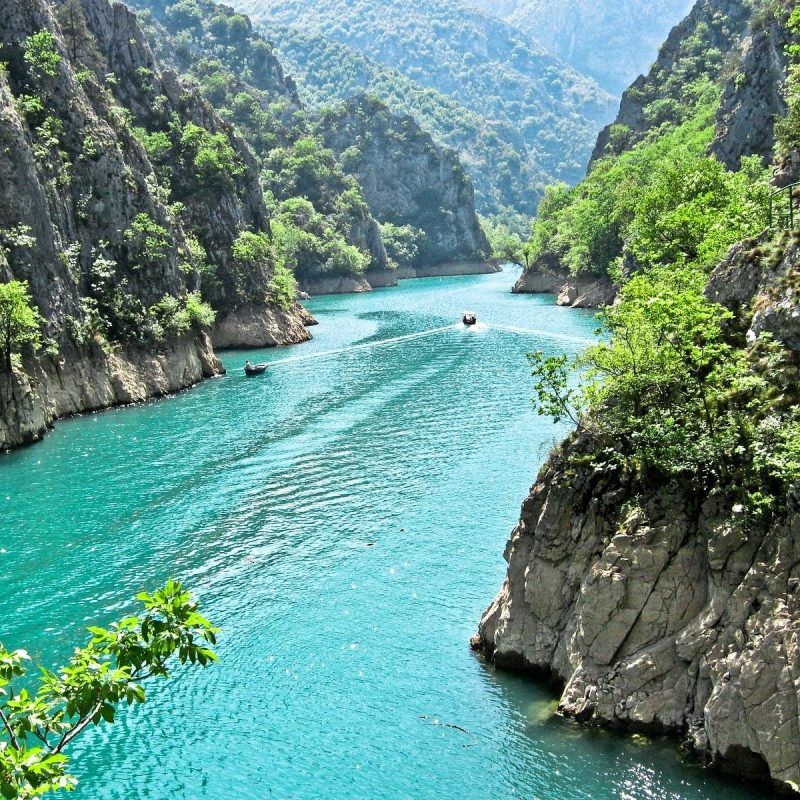
Matka
Matka is a canyon located west of central Skopje, Macedonia. Covering roughly 5,000 hectares, Matka is one of the most popular outdoor destinations in Macedonia and is home to several medieval monasteries. The Matka Lake within the Matka Canyon is the oldest artificial lake in the country and it is also considered as “Mala Sveta Gora” because of the large number of churches. 🗺️ View location on the map
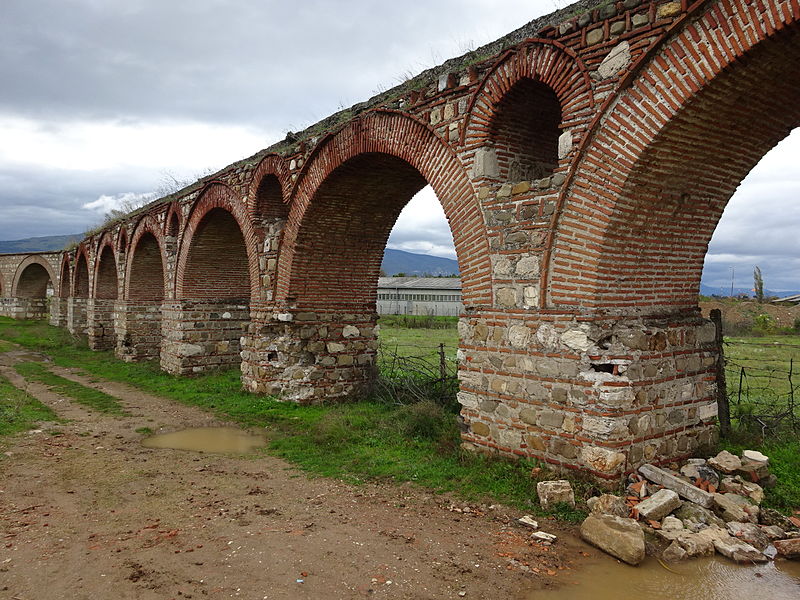
Skopje Aquaduct
The Skopje aquaduct was built by Justinian I (527-565 years.) from brick and stone with a length of 386 m and a height of 16.5 m. 🗺️ View location on the map
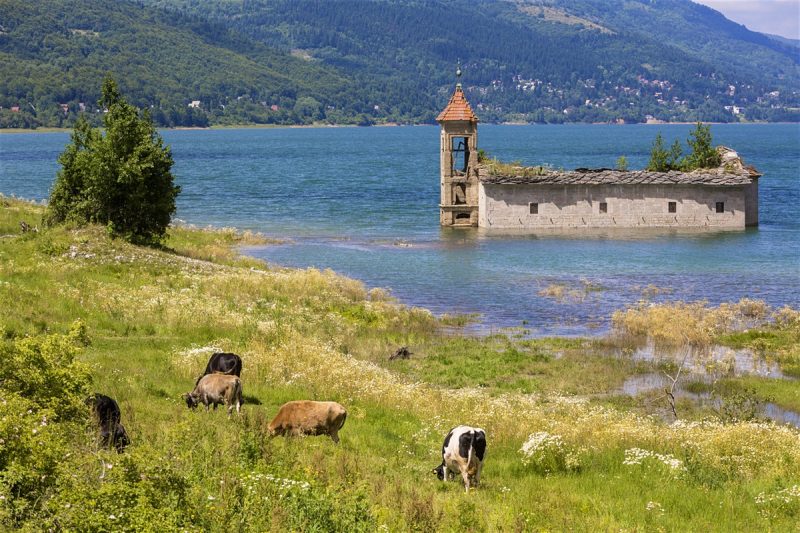
St Nicholas Church Mavrovo
St Nicholas Church is an abandoned church in Mavrovo, which is submerged in Mavrovo Lake. It was built in 1850 with icons painted by Dicho Zograf and with the construction of the artificial Mavrovo Lake, the church got submerged under water.
Despite being submerged in water, the church has preserved its initial construction. Its bell tower still exists, although the church’s interior is destroyed and the roof has completely caved in. The church was included in the list of abandoned churches published in 2013 by The Huffington Post. 🗺️ View location on the map
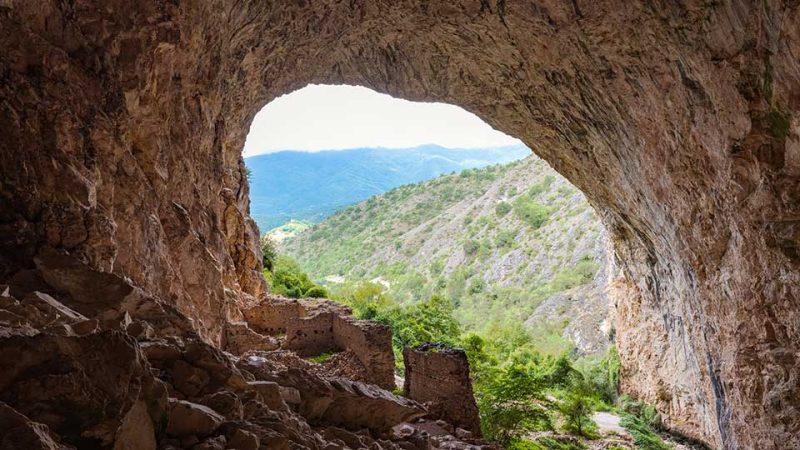
Peshna Cave
Peshna – a cave with the largest opening in the Balkans
A few kilometers to Makedonski Brod, along the road to Samokov, you can see the cave, declared a monument of nature. It is located on the right valley side of the Treska River. It is built in dolomite marbles. With dimensions of 16.8 * 52.4 meters, according to speleologists, this is the largest cave entrance in the Balkans. The ceiling part of the opening has a height of 40 meters and the cave itself is about 50 meters high. The length of the cave is 124 meters. In the cave there are swallows nesting, and in it live bats. Peshna in “New York Times” is described as identical to the imaginary caves in the “Lord of the Rings” by Tolkien. 🗺️ View location on the map
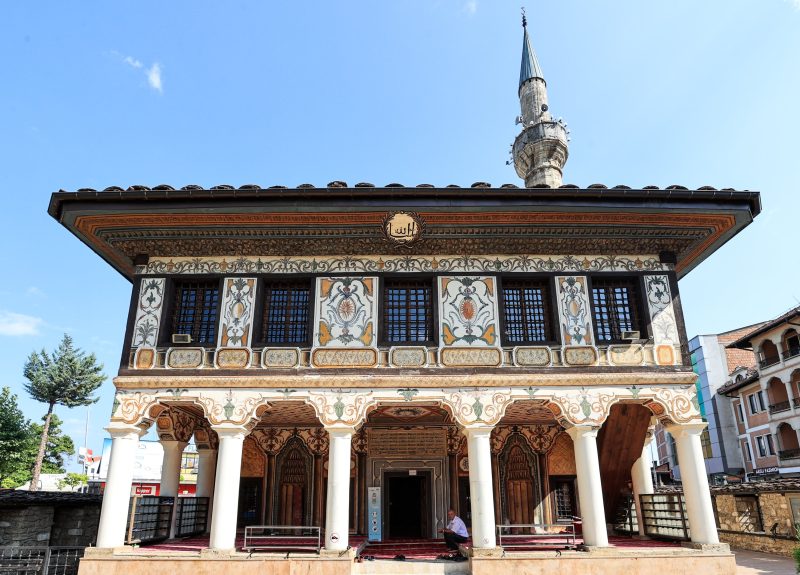
Sharena Mosque (Decorated Mosque)
Sharena Djamija meaning Decorated Mosque in English but also variably translated as Painted Mosque, is a mosque located near the Pena River in Tetovo, Macedonia. The mosque was originally built in 1438 and later rebuilt in 1833 by Abdurrahman Pasha. Unlike other mosques of the Classical Ottoman period, the Sharena Mosque is more characteristic of traditional mosques in Anatolia, as it was constructed before the conquest of Constantinople, when Byzantine-influenced mosque domes became the standard design. 🗺️ View location on the map
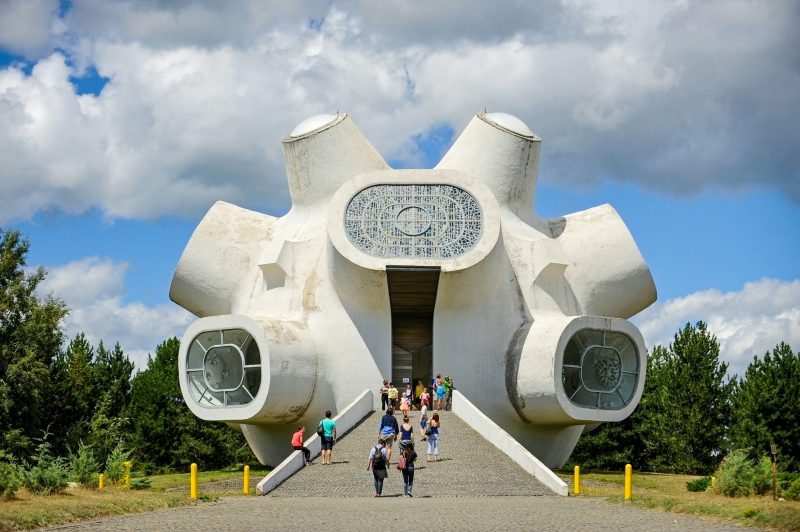
Makedonium
Ilinden, also known as Makedonium is a monument in Krusevo, Macedonia.
It is dedicated to all the fighters and revolutionaries who participated in the Ilinden uprising, as well as soldiers-partisans of the Macedonia National Liberation Struggle 1941-1944. 🗺️ View location on the map
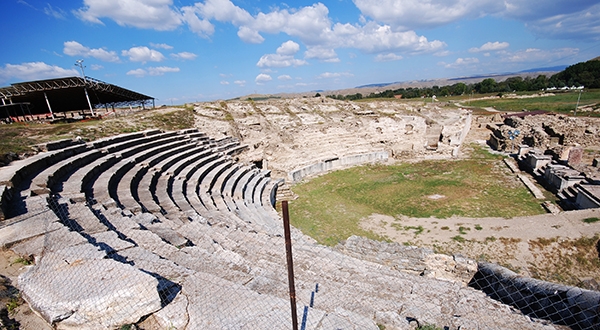
Skupi
Skupi is an archaeological site located between Zajčev Rid and the Vardar River, several kilometers from the center of Skopje in Macedonia. A Roman military camp was founded here in the second century BC on the site of an older Dardanian settlement. It became later Colonia Flavia Aelia Scupi and many veteran legionnaires were settled there. A Roman town was founded in the time of Domitian (AD 81–96) and Skupi became the chief center for romanizing Dardania. It was abandoned in AD 518 after an earthquake destroyed the city. 🗺️ View location on the map
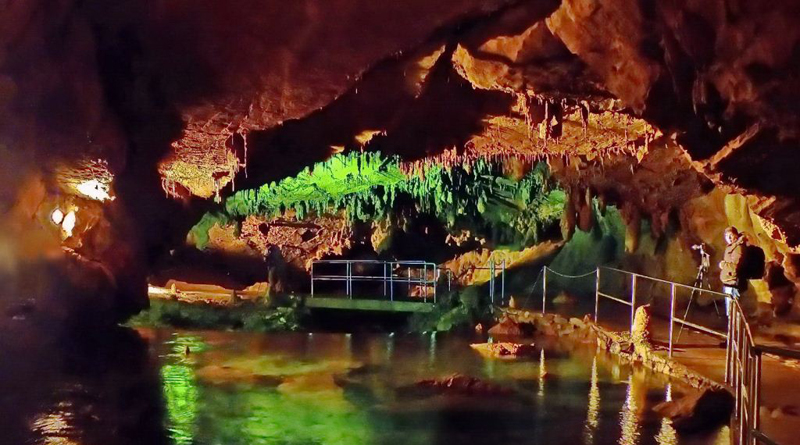
Cave Vrelo
Located on the right bank of the Treska River, the cave was listed as one of the top 77 natural sites in the world in the New7Wonders of Nature project. Vrelo Cave has many stalactites including a large one in the middle of the cave is known as the “Pine Cone” due to its shape. There are two lakes at the end of the cave, with one larger than the other. The smaller lake is 8 metres (26.2 feet) at its longest length and 15 metres (49.2 feet) in depth at its deepest point. The larger lake is 35 metres (114.8 feet) at its longest length, and 18 metres (59 feet) at its deepest point. Though the exact depth of the cave is unknown, some speculate that it could be the deepest underwater cave in the world. 🗺️ View location on the map
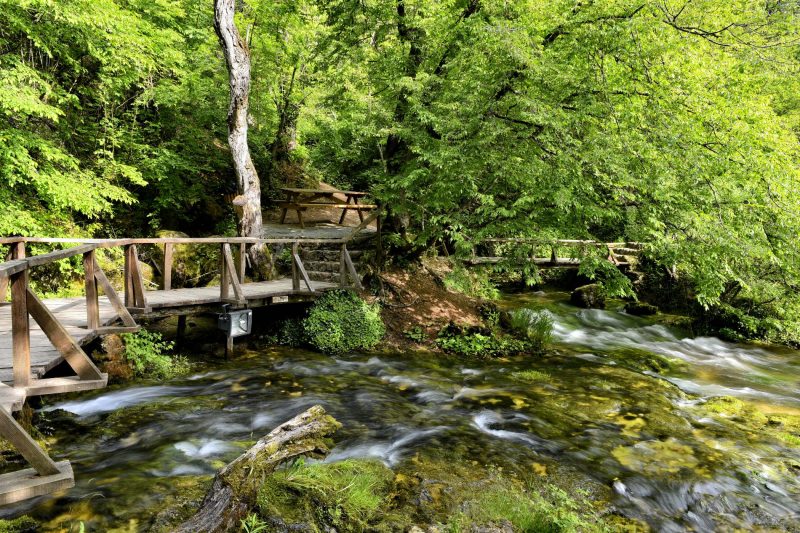
Vevcani Springs
Stretching from the village to an altitude of 2000 meters up in the mountains, the springs run with a combined water flow of 400 gallons per second. The largest one is located at the opening of one of the many caves that you can find in the region. Below, there are ten other minor springs that converge in their flow. 🗺️ View location on the map
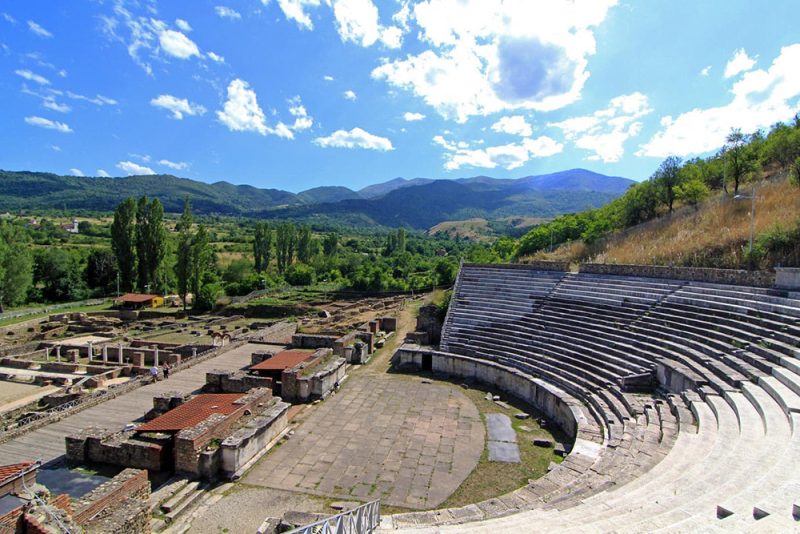
Heraclea Lyncestis
Heraclea Lyncestis was an ancient city in Macedon, ruled later by the Romans. Its ruins are situated 2 km (1.2 mi) south of the present-day town of Bitola, Macedonia. In the early Christian period, Heraclea was an important Episcopal seat and a waypoint on the Via Egnatia that once linked Byzantium with Rome through the Adriatic seaport Dyrrachium. 🗺️ View location on the map
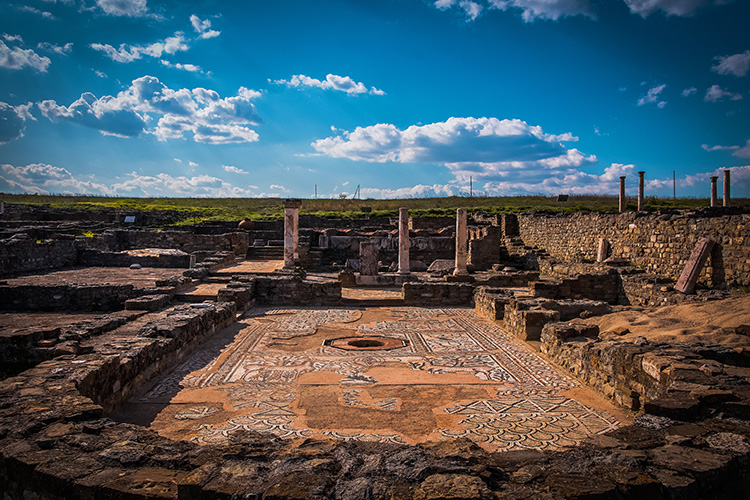
Stobi
Stobi or Stoboi was an ancient town of Paeonia, later conquered by Macedon, and finally turned into the capital of the Roman province of Macedonia Salutaris. It is located near Gradsko, Macedonia, on the main road that leads from the Danube to the Aegean Sea and is considered by many to be the most famous archaeological site in Macedonia. Stobi was built where the Erigon (Crna River) joins the Axios (Vardar), making it strategically important as a center for both trade and warfare. 🗺️ View location on the map
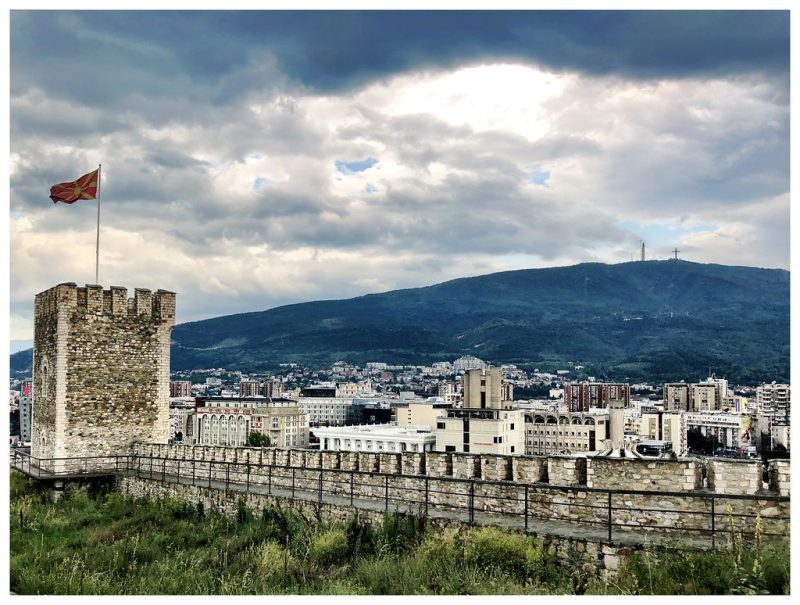
Skopje Fortress
The Skopje Fortress, commonly referred to as Kale, is a historic fortress located in the old town of Skopje. The first fortress was built in 6th century AD on a land that was inhabited during the Neolithic and Bronze Ages (roughly 4000 BC onwards). 🗺️ View location on the map
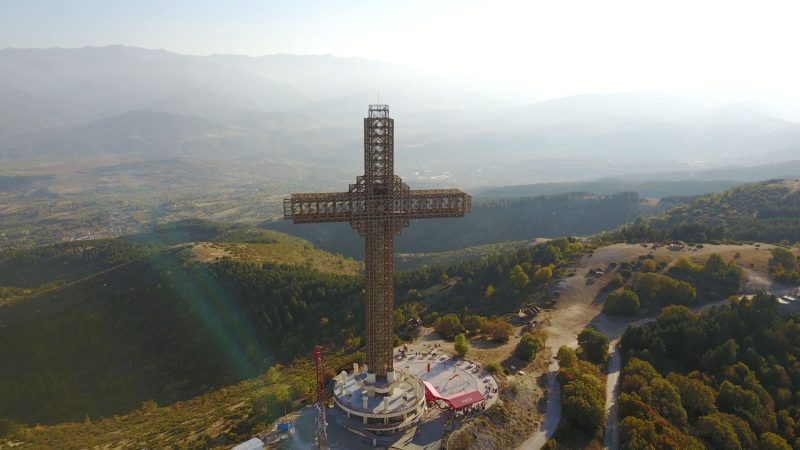
The Millennium Cross
The Millennium Cross is a 66 meter-high cross situated on the top of the Vodno Mountain in Skopje, and it is the biggest cross in the world. It was constructed to serve as a memorial of 2,000 years of Christianity in Macedonia and the world. 🗺️ View location on the map
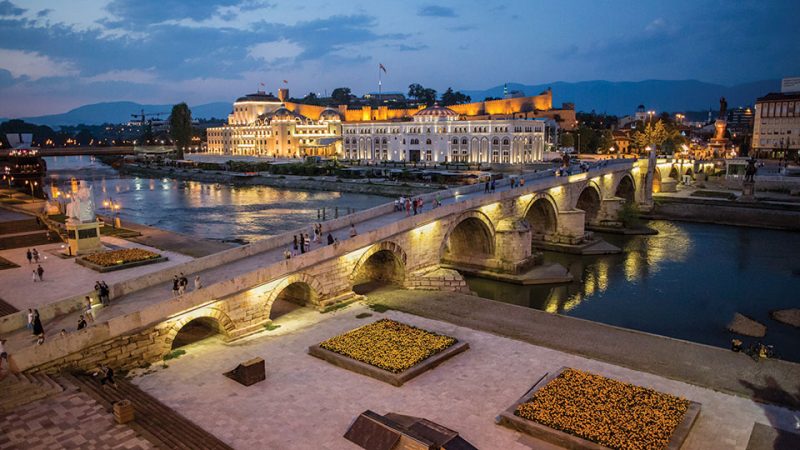
Stone Bridge
The Stone Bridge is a bridge across the Vardar River in Skopje, the capital of the Republic of Macedonia. The bridge is considered a symbol of Skopje and is the main element of the coat of arms of the city, which in turn is incorporated in the city’s flag. 🗺️ View location on the map
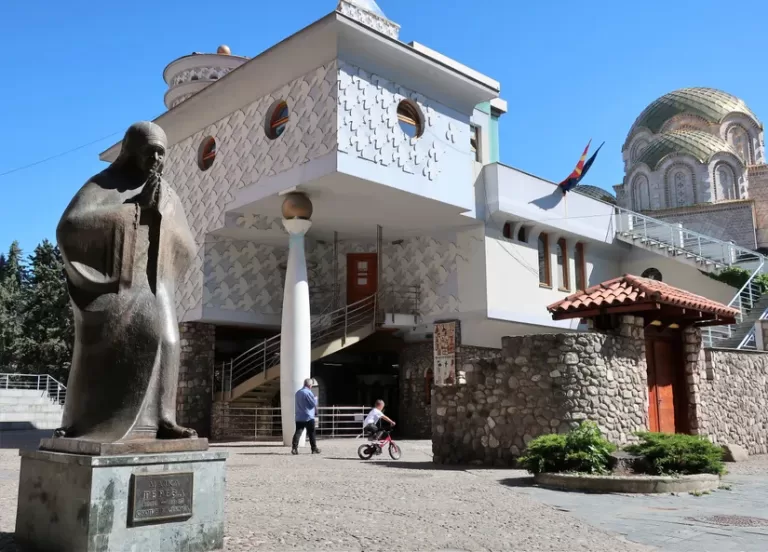
Memorial House of Mother Theresa
The Mother Teresa Memorial House is dedicated to the Catholic saint and Nobel Peace Prize laureate Mother Teresa. It is located in her hometown Skopje, Macedonia, where she lived from 1910 to 1928. The memorial house was built on the very location of the once Sacred Heart of Jesus Roman Catholic Church, where Mother Teresa was baptized. 🗺️ View location on the map
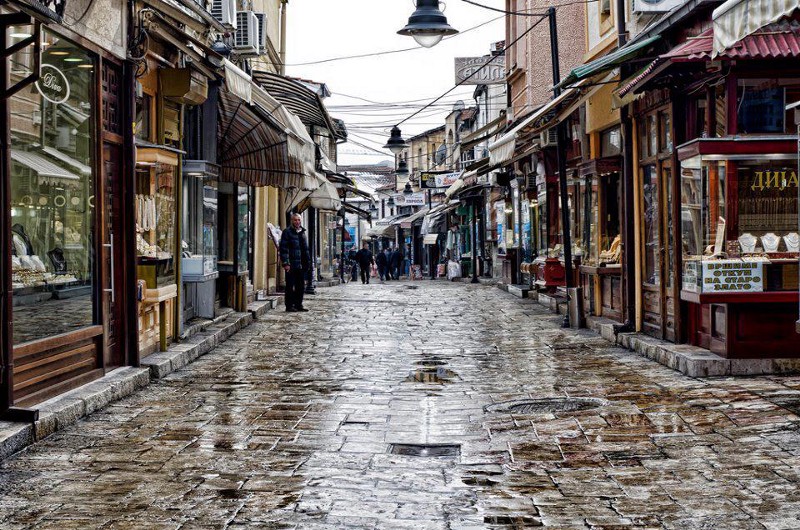
The Old Bazaar
The Old Bazaar (Macedonian: Стара Чаршија, Stara Charshija from the Turkish: Çarşı) in Skopje is the largest bazaar in the Balkans outside Istanbul. It is situated on the eastern bank of the Vardar River, stretching from the Stone Bridge to the Bit-Pazar and from the Skopje Fortress to the Serava river. 🗺️ View location on the map
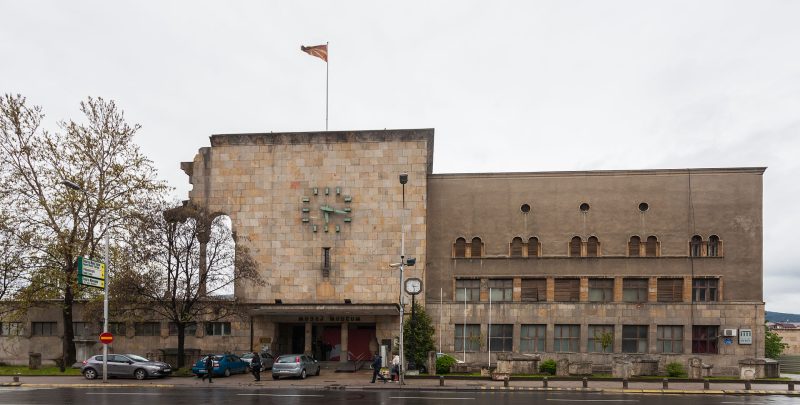
Museum of the City of Skopje
Museum of the City of Skopje is a cultural institution located in Skopje, Macedonia. Founded in 1949, it is located in a former railway station that was partly destroyed in the 1963 earthquake. The museum is home to permanent еxhibitions representing the history of Skopje, from the first recorded settlements around 3000 BC to present. 🗺️ View location on the map
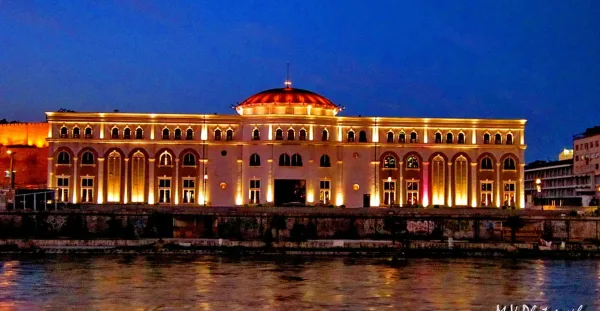
Museum of the Macedonian Struggle for Independence
The Museum of the Macedonian Struggle is a national museum of Macedonia located in the capital city of Skopje. Construction of the museum began on 11 June 2008 and it was opened to the public on the 20th anniversary of the declaration of independence on 8 September 2011.
The building lies on the former location of the Skopje branch of the National Bank of Yugoslavia, between the Archaeological Museum of North Macedonia, the Holocaust Museum of Macedonia, the Stone Bridge and the Vardar River.
The exhibit covers the period from the beginning of the resistance movement against the Ottoman rule, until the declaration of independence from Yugoslavia on 8 September 1991. The guided tours take visitors through 13 exhibits ending in front of the original copy of the 1991 Declaration of Independence. 🗺️ View location on the map